Reviewing the Funny Turtle Flat Earth Design
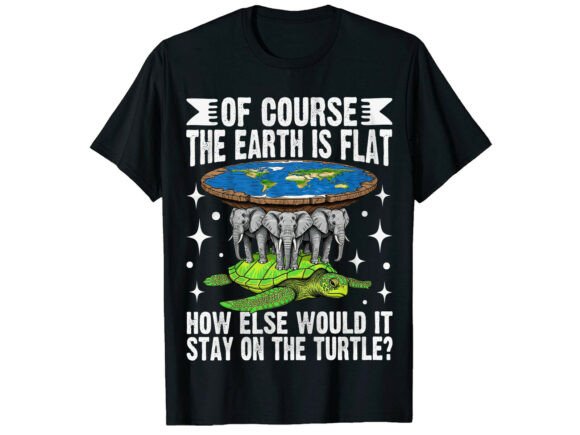
As a designer who has spent countless hours digitizing and stitching out various T-Shirt Designs, I have learned that the difference between a bestseller and a closet reject often comes down to how a graphic translates from screen to thread. Recently, I pulled up the Funny Turtle Flat Earth Day T-Shirt file to evaluate its potential for my current batch of custom orders. This isn't just another generic clipart piece; it is a specific blend of humor and environmental messaging that requires careful handling to ensure it lands correctly with the audience.
The first impression of this design is playful yet pointed. The visual personality relies on the juxtaposition of a slow-moving turtle with the absurd concept of a flat earth, creating an immediate conversation starter. For embroidery designers and Etsy sellers, this mood is crucial. It appeals to eco-lovers and teachers who appreciate wit over preachy slogans. However, when we look at this as a machine embroidery design, we must look past the joke and assess the structural integrity of the artwork. Does the layout hold up under the tension of the needle? Let’s dive into the practical realities of using this asset in a real-world embroidery project.
Real-World Application: The Custom Tote Bag Test
To truly understand the viability of the Funny Turtle Flat Earth Day T-Shirt, I decided to test it on a canvas tote bag rather than a standard tee. Tote bags are a staple for small shop products and craft fairs, but they present unique challenges due to their woven texture. My goal was to create a sustainable gift item that aligns with the environmental theme of the graphic.
When hooping the heavy cotton canvas, I noticed that the central turtle figure required precise alignment. The design’s shape is relatively compact, which is beneficial for standard hoop sizes. However, the "flat earth" disc element behind the turtle needs to be distinct from the background fabric. If you are working with a natural or off-white canvas, the contrast might be too low if you stick strictly to the default thread colors. I found that swapping the outline to a darker shade significantly improved the visual clarity. This is a common issue with Graphics intended for print but adapted for stitch; what looks sharp on a white digital background can get lost on textured fabric.
The reaction from my test group—friends who fit the profile of environmental activists and teachers—was overwhelmingly positive. They appreciated the subtle humor. This confirms that the design has strong giftability. It works exceptionally well as a personalized gift because it feels curated rather than mass-produced. For a craft business, this emotional connection is what drives repeat customers.
Stitching Performance and Technical Considerations
From a technical standpoint, evaluating any digital embroidery file requires a close look at stitch types and density. While I do not have the exact stitch count for this specific file without loading it into my software, I can infer several things from the visual complexity. The turtle’s shell likely utilizes a fill stitch to create volume and texture. If the digitizer has done their job well, this fill should be balanced to prevent puckering, especially on thinner fabrics.
One area where caution is needed is the lettering. Many humorous designs rely on small text to deliver the punchline. In embroidery, tiny lettering can become illegible if the stitch density is too high or if the font strokes are too thin. Before committing to a large production run of custom apparel, I strongly advise stitching out a sample on scrap fabric. Check if the letters remain crisp after washing. If the text blurs, you may need to simplify the design or increase the size.
Additionally, consider the use of satin stitch versus running stitch for the outlines. Satin stitches provide a glossy, premium look but can snag easily on items like tote bag designs that undergo frequent friction. A running stitch border might be more durable for high-use items, even if it sacrifices some visual pop. For a sweatshirt embroidery project, however, satin stitch borders usually hold up well against the fuzzy texture of the fleece, providing a nice contrast.
Navigating Fabric and Hoop Constraints
Not every surface is created equal. While the Funny Turtle Flat Earth Day T-Shirt is marketed for tees, its application on curved surfaces like caps requires extra attention. The curvature of a cap can distort the image, making the flat earth disc appear oval. To mitigate this, use a sturdy stabilizer and ensure the design is centered perfectly within the hoop size limits of your machine. For baby embroidery projects, such as onesies, ensure the design is scaled down appropriately so it does not overwhelm the small garment. Soft, stretchy fabrics demand lighter tension and possibly a cut-away stabilizer to maintain shape after washing.
Dark fabrics present another hurdle. If you are stitching this on a black or navy hoodie, the standard color palette may not pop. You might need to add a white underlay or adjust the thread choices to brighter, neon-like shades to maintain visibility. This is where creating a printable mockup in black and white can help you visualize contrast issues before you waste thread and time.
Commercial Viability and Brand Consistency
For commercial embroidery professionals and boutique owners, consistency is key. Using a design like this across a product line—such as matching aprons, kitchen towels, and pillow covers—can strengthen brand identity. The whimsical nature of the turtle fits well with brands that focus on sustainability, education, or quirky home decor. However, always verify the licensing terms of the design assets. Just because a file is available for purchase does not automatically grant unlimited commercial rights. Confirm whether you can sell the finished product or if there are restrictions on quantity.
Moreover, the perceived value of the item increases when the embroidery is clean and professional. Loose threads, uneven tension, or misaligned layers can detract from the humor and make the product look cheap. Take the time to trim jump stitches and press the garment after stitching. A well-executed embroidered patch or direct-to-garment stitch job signals quality to the buyer, fostering trust and encouraging positive reviews.
Final Designer Notes
In conclusion, the Funny Turtle Flat Earth Day T-Shirt is a versatile and engaging option for your next embroidery project. It bridges the gap between humor and advocacy, making it suitable for a wide range of customers. To get the best results:
- Test the design on scrap fabric similar to your final material to check for puckering or thread breaks.
- Evaluate thread color contrast against both light and dark backgrounds.
- Inspect small details and lettering for legibility at the intended size.
- Use appropriate stabilizers for stretchy or textured fabrics.
- Confirm all licensing agreements before selling items derived from this applique design or standard graphic.
By approaching this design with a critical eye and practical testing, you can transform a simple digital file into a standout handmade product that resonates with your audience. Whether for a holiday gift, a teacher appreciation present, or a new listing in your online store, this turtle has the potential to carry your brand forward with style and substance.