Review: Running Late Alarm Clock Cartoon for Embroidery
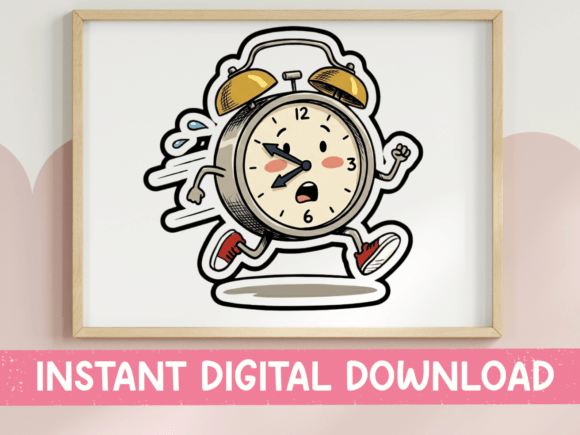
As a designer who has spent countless hours digitizing and stitching out various motifs, I have learned that the charm of a design often lies in its personality. When I first loaded the Running Late Alarm Clock Cartoon onto my screen, it immediately struck a chord. It is not just another cute clock; it is a narrative piece. The vintage twin-bell aesthetic combined with anthropomorphic limbs creates a sense of urgency that is both humorous and relatable. For those of us in the creative industry, this frazzled timepiece is basically a spirit animal. But beyond the initial laugh, does it hold up under the needle? Let’s dive into how this graphic performs in real-world embroidery projects.
First Impressions and Visual Personality
The layout of this design is dynamic. Unlike static clipart, the sprinting pose introduces diagonal lines and movement. From a digitizer’s perspective, this is interesting because it challenges the stability of the stitch pattern. The red sneakers provide a necessary pop of color against the likely metallic or brass tones of the clock body. The open mouth adds character, ensuring the expression reads clearly even from a distance. This visual personality makes it an excellent candidate for T-Shirt Designs where immediate impact is crucial. However, for embroidery, we must consider how these playful details translate into thread.
The mood is frantic yet friendly. It avoids being stressful by leaning into cartoon exaggeration. This balance is vital for commercial appeal. Customers looking for a personalized gift or a funny addition to their wardrobe want something that sparks joy, not anxiety. This design achieves that by turning the universal stress of tardiness into a whimsical character. It fits seamlessly into categories like Graphics for apparel, but its potential extends far beyond a simple print.
Real-World Application: The Custom Tote Scenario
To truly evaluate this machine embroidery design, I imagined a specific project: a heavy canvas tote bag for a college student or a busy professional. Canvas is forgiving, but it has a distinct texture. I visualized placing the clock centrally on the bag. The red sneakers would contrast beautifully against natural or navy canvas. The arms and legs, being thinner elements, would need careful attention to stitch density. If the density is too low, the fabric might show through, breaking the illusion of the solid cartoon shape. If too high, the fabric could pucker.
In this scenario, the design serves as a conversation starter. Imagine gifting this as a holiday embroidery present to a friend who is always five minutes late. It transforms a standard accessory into a handmade product with emotional resonance. The durability of the embroidery ensures that the joke lasts as long as the bag. This is where the value of a well-digitized embroidery file becomes apparent. A poor conversion would result in broken threads on the extremities, ruining the comedic effect.
Apparel and Wearables
Moving beyond totes, let’s consider sweatshirt embroidery. A crewneck sweatshirt provides a large, stable surface area. Here, the Running Late Alarm Clock Cartoon can be scaled up significantly. The fill stitches used for the clock body would provide a plush, textured look that feels premium. However, one must be cautious with the finer details. The bells on top of the clock are small. On a thick fleece background, these need to be simplified or reinforced with a satin stitch border to maintain definition. For custom apparel aimed at teens or young adults, this design hits the sweet spot between retro nostalgia and modern humor.
What about baby embroidery? While the theme of running late is adult-centric, the cartoon style is child-friendly. It could work on a diaper bag or a toddler’s jacket, provided the colors are softened. Pastel blues and yellows instead of stark reds and blacks could adapt the design for a nursery context. Always check the licensing, but assuming personal use, it adds a playful touch to baby gear.
Technical Considerations and Pitfalls
No design is universal, and this one has specific constraints. The most critical factor is hoop size. Because the character is sprinting, it has a wide horizontal footprint. You cannot squeeze this into a 4x4 inch hoop without losing the essence of the movement. A 5x7 or larger hoop is ideal to capture the full stride. Attempting to shrink it too much will cause the legs and arms to merge into the body, creating a blob rather than a character.
Fabric texture also plays a massive role. On thin or stretchy fabrics, such as jersey knits for t-shirts, stabilization is non-negotiable. The weight of the fill stitches can distort lightweight material. I recommend using a cut-away stabilizer for garments that will be washed frequently. For caps, the curved surface presents a challenge. The horizontal spread of the design might wrap awkwardly around the front panel. In such cases, consider splitting the design or choosing a different motif. An embroidered patch might be a better solution for hats, allowing you to stitch the design on flat felt and then apply it.
Color contrast is another technical hurdle. The design relies on the distinction between the clock body, the face, and the red shoes. If you choose to stitch this on a dark fabric, ensure your thread colors are bright enough to stand out. Testing the design in black and white mockups can help you verify if the shapes remain distinct without relying on color. If the legs disappear against the background, you may need to add a white or light-colored backing stitch.
Enhancing Product Value and Brand Consistency
For Etsy sellers and small shop owners, consistency is key. This design fits well within a brand identity that values humor, punctuality (or the lack thereof), and retro aesthetics. It can be part of a larger collection of time-themed items. Using high-quality design assets like this elevates the perceived value of the finished product. Customers are willing to pay more for embroidery that looks crisp and professional rather than homemade and messy.
When creating printable mockup images for your online store, show the design in context. Display it on a tote bag next to a coffee cup, or on a sweatshirt worn by a model rushing out the door. This storytelling approach increases buyer engagement. It helps the customer visualize the item in their own life. For commercial embroidery projects, such as corporate gifts for a startup with a relaxed culture, this design can serve as a fun, morale-boosting item.
Practical Designer Notes
- Test on Scrap Fabric: Always run a test stitch-out on the same type of fabric you plan to use for the final product. This reveals issues with tension and density.
- Check Thread Colors: Ensure you have the specific shades of red and metallic gold or brass required. Substitutions can change the look dramatically.
- Review Stitch Density: Look closely at the legs and arms. If they are too dense, they may break. If too sparse, they may look unfinished.
- Confirm Hoop Size: Measure the design dimensions before hooping. Do not force a large design into a small hoop.
- Inspect Small Details: Zoom in on the eyes and mouth. These features define the expression. Ensure they are clean and not buried in surrounding stitches.
- Licensing Verification: Before selling any small shop product featuring this design, confirm the license terms. Some files allow commercial use, while others are for personal use only.
In conclusion, the Running Late Alarm Clock Cartoon is a vibrant, character-driven design that offers significant potential for creative entrepreneurs. It requires thoughtful execution regarding hoop size, stabilization, and fabric choice, but the payoff is a unique, engaging product. Whether used for a tote bag design, a funny gift, or a standout piece in your apparel line, it brings a human touch to machine embroidery. By respecting the technical limitations and leveraging its visual strengths, you can create items that customers love and remember.