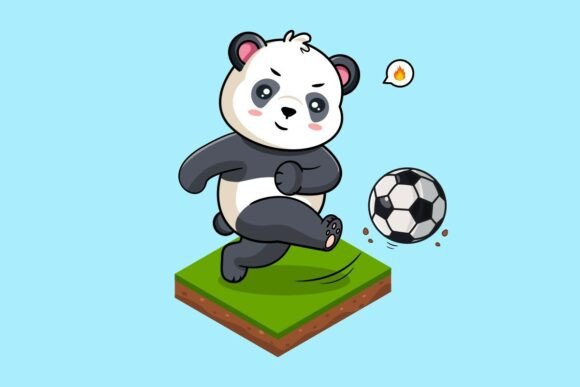
Review: Cute Panda Kick Soccer on a Green Field
As an embroidery designer who spends more time staring at digitized paths than I care to admit, I have learned that not every cute illustration translates well to thread. We often browse marketplaces for Illustrations and Graphics, assuming that if it looks good on a screen, it will look good on fabric. That is a dangerous assumption. Recently, I pulled up the Cute Panda Kick Soccer on a Green Field design to evaluate its potential for a upcoming batch of custom orders. My goal was not just to admire the aesthetic, but to determine if this vector-style concept holds up under the needle.
First Impressions and Visual Personality
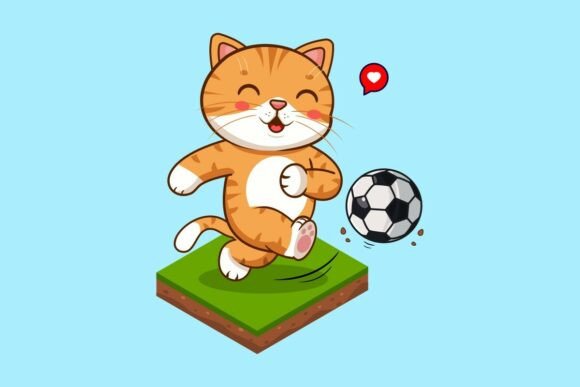
The immediate appeal of Cute Panda Kick Soccer on a Green Field lies in its energy. It captures a moment of action—a panda mid-kick—which is surprisingly difficult to render in embroidery without losing clarity. The kawaii style suggests rounded shapes and soft edges, which generally translate well to satin and fill stitches. However, the "green field" component raises an immediate flag for any experienced stitcher. Large areas of solid color in the background can lead to excessive stitch counts and potential fabric puckering if not managed correctly.
The mood is cheerful and energetic, making it an ideal candidate for youth-oriented products. It does not feel static; the posture of the panda suggests movement. For a designer, this means paying close attention to how the limbs are digitized. If the legs are too thin, they may break during washing. If the soccer ball lacks proper shading or contouring, it might look flat against the green backdrop. The visual personality is friendly and approachable, which is exactly what customers look for in personalized gifts and boutique items.
Real-World Application: The Tote Bag Test
To test the viability of this design, I imagined applying it to a canvas tote bag. This is a common request for small shop owners and Etsy sellers looking for unique, handmade product offerings. Canvas is sturdy, which helps support the stitch density required for a design with a full background like this. However, the size of the hoop becomes critical here. If you are using a standard 5x7 inch hoop, you might need to crop the "green field" significantly to focus on the panda and the ball. This cropping could enhance the design by removing unnecessary bulk, turning a complex scene into a focused character piece.
For a sweatshirt embroidery project, the dynamics change. Fleece and cotton blends have more give than canvas. Placing a dense design like Cute Panda Kick Soccer on a Green Field on the chest of a hoodie requires a robust stabilizer. I would recommend a cut-away stabilizer to prevent the weight of the threads from distorting the garment over time. The contrast between the black and white panda and the green field works well on light-colored apparel, but on dark navy or black sweatshirts, the green field might get lost unless the thread colors are vibrant and high-quality.
Considerations for Baby Items and Apparel
Baby embroidery demands a different level of scrutiny. Softness is paramount. A design with high stitch density can feel stiff and uncomfortable against sensitive skin. If I were using this for a baby onesie or a nursery decor pillow, I would likely remove the background entirely. Embroidering just the panda kicking the ball allows for better breathability and comfort. The kawaii aesthetic fits perfectly with baby showers and holiday gifts, but the execution must prioritize texture over completeness. Always check the stitch count before committing to small garments; less is often more when dealing with tiny hoops and delicate fabrics.
Technical Challenges and Fabric Compatibility
One of the biggest hurdles with multi-color designs involving large fill areas is registration. The transition from the panda’s fur to the green grass needs to be clean. In digital Graphics, pixels blend seamlessly. In embroidery, thread overlaps. If the digitizing is poor, you might see gaps or unwanted color bleeding where the green meets the white of the soccer ball. This is why testing on scrap fabric is non-negotiable. You need to see how the machine handles the jump stitches between the distinct color blocks.
Textured fabrics present another challenge. If you are stitching this on a waffle-knit towel or a ribbed cap, the underlying texture can distort the fine details of the panda’s face. Caps, in particular, are curved surfaces that require specialized backing and often a reduction in stitch density to prevent the design from looking bulky. For an embroidered patch, however, this design could shine. Patches allow for heavy stabilizer and dense stitching without worrying about garment drape. A patch version of Cute Panda Kick Soccer on a Green Field could be a bestseller for craft fairs, offering versatility for customers to iron or sew onto jackets and bags later.
Enhancing Product Value and Brand Consistency
From a business perspective, the quality of your embroidery file directly impacts customer trust. A sloppy stitch-out suggests a lack of professionalism, while a crisp, clean design elevates the perceived value of the finished product. When selling on platforms like Etsy, your printable mockup must accurately represent the final item. If the digital preview shows smooth gradients that the embroidery machine cannot replicate, you risk negative reviews. Transparency is key. Show close-ups of the actual stitching in your listings.
This design fits well within a broader collection of sports-themed or animal-themed assets. For brand consistency, ensure that the thread colors you choose match your shop’s palette. Using standard rayon or polyester threads in consistent shades of green, black, and white will help maintain a cohesive look across different products, whether they are aprons, tea towels, or blanket accents. Commercial embroidery projects often require scalability, so verify if the design retains its integrity when resized.
Practical Designer Notes for Success
Before you load this design into your machine, take a moment to review the technical specifics. Since exact file formats and stitch counts are not provided in the basic description, you must check these details with the vendor. Look for formats compatible with your specific machine, such as PES, DST, or JEF. Confirm the recommended hoop size to avoid resizing errors that can distort the aspect ratio.
- Test Stitch First: Always run a test on similar fabric to check for tension issues and thread breaks.
- Check Contrast: Ensure the green field contrasts sufficiently with the fabric color. On white fabric, it will pop; on beige, it might look muddy.
- Stabilizer Choice: Use a tear-away for stable woven fabrics and a cut-away for knits and stretchy materials.
- Detail Inspection: Zoom in on the panda’s eyes and the soccer ball patterns. Are they too small? If so, consider simplifying or enlarging the design.
- Licensing Verification: Confirm whether the license allows for commercial use if you plan to sell finished items. This is crucial for craft business owners.
In conclusion, Cute Panda Kick Soccer on a Green Field offers strong potential for engaging, playful embroidery projects. Its success depends entirely on thoughtful adaptation to the chosen medium. By understanding the interplay between stitch density, fabric texture, and hoop constraints, you can transform a simple digital illustration into a high-quality handmade product. Whether for a holiday gift, a custom apparel line, or a unique tote bag design, this panda has the charm to capture attention—if stitched with care and precision.